A little muse about protest songs

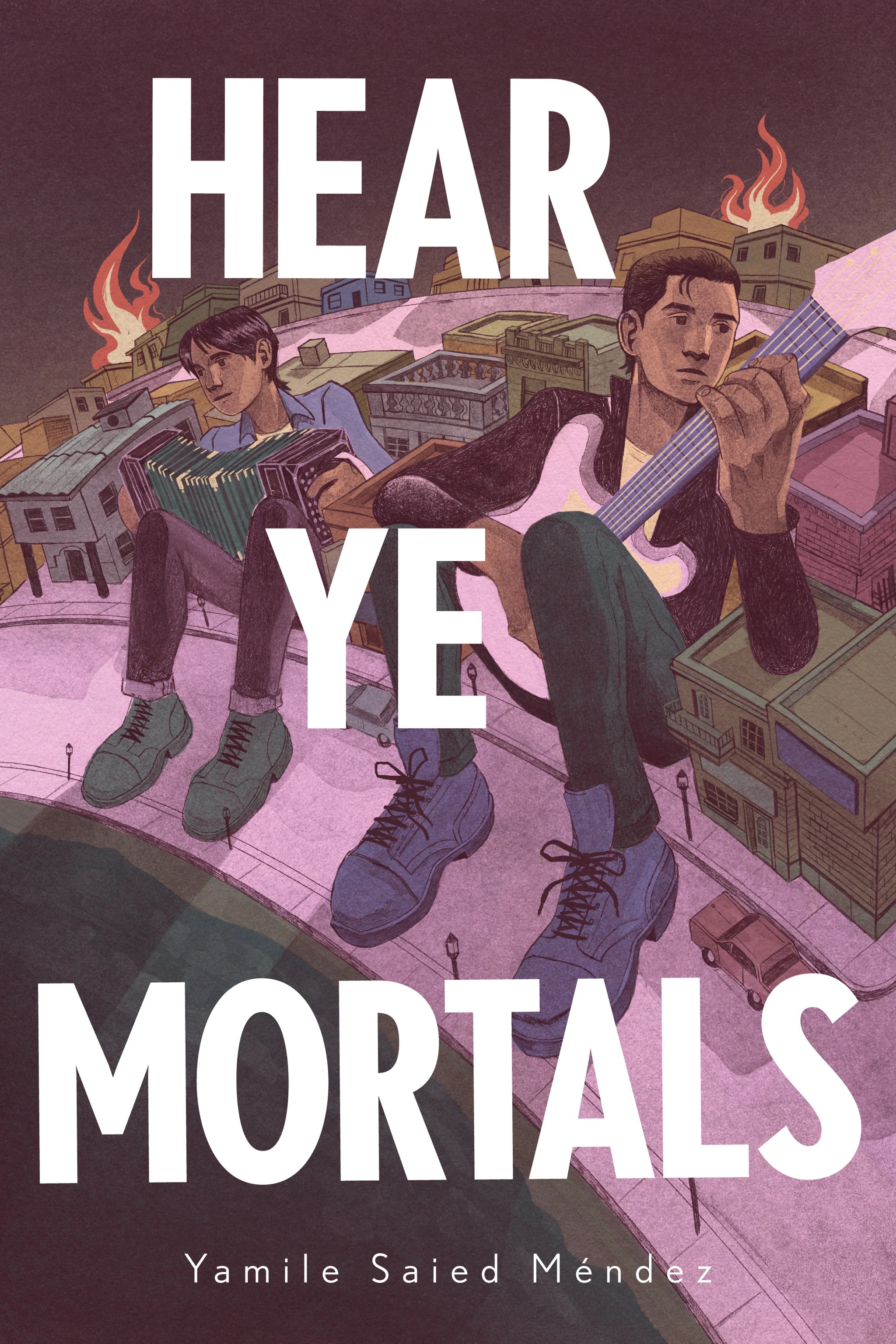
I have recently been reading Hear Ye Mortals, a brilliant YA novel by Yamile Saied Méndez, set in Argentina in 1976, just at the time of the coup that instigated a notoriously violent seven-year civic-military dictatorship. The book is about two teenage brothers who form a band with some friends from their barrio. Although the songs they write are not intended to be political, they come from the heart, and when one of their numbers mysteriously makes its way onto the radio it becomes an anthem for the masses, which inevitably spells trouble for the group who produced it. It’s a fantastic book, and it says a lot about the power of both music and literature – particularly children’s literature – as tools for resistance.

Coincidentally, on the evening of the day I finished reading Hear Ye Mortals, I went to see the band Love play in a pub down the road from me. There’s only one original member still surviving – guitarist Johnny Echols – but the current line up was fantastic and it was a brilliant evening. As I merrily sang along to ‘Live and Let Live’, however, I found myself paying closer attention than usual to the lyrics, and thought to myself, hang on a minute, this is a protest song! Which is probably obvious to anyone who has spent five minutes actually researching the band’s backstory – they were one of the first racially diverse rock bands to be signed to a major record label, and the time they were making music coincided with the rise of the civil rights movement in America. BUT, what really struck me was that the song was released in 1967, and the lyrics are still just as relevant today. Which is depressing, when you think about it.

I suppose the question I’m asking is: how do we move from crowds of people singing along to these songs, or being moved by these stories, to actual societal (and political) change? Because really, believing things need to change isn’t enough, is it? At some point something actually needs to be done, and it needs to be a collective effort. I don’t think anyone has the answer really, and I guess the problem is that a section of society – those with all the power, mainly – doesn’t believe anything needs to change. I do believe though, that by teaching for critical consciousness in children and teenagers, there is some hope for the future. And maybe if, like me, they read a book like Hear Ye Mortals and then listen to a protest song, they will start to join the dots. Because who knows what might have happened if I’d made that connection at 17? As it is, I’m going to attempt to make a difference in the only way I know how – through translation.
Stage 1: Getting close to the source text

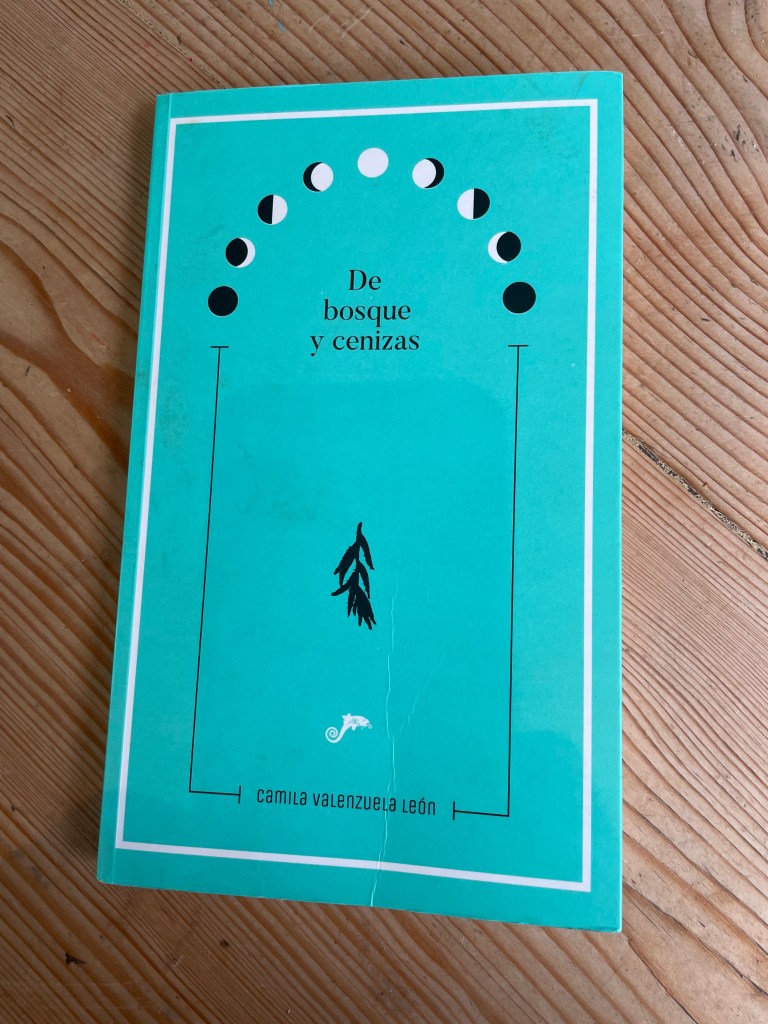
A well-thumbed copy of Camila Valenzuela León's YA novel, De bosque y cenizas

Translating a book for an academic project allows for a bit of luxuriating in the text. If you’re trying to make a living out of literary translation (emphasis on the “trying” there!), then chances are you haven’t got time to sit down and read the book several times before you start. In which case, you might do a quick skim to get a taste for the narrative voice etc, or you might go straight into your first draft and read as you go – I have a feeling that’s what Daniel Hahn said he does, in Catching Fire, but I’ve lent the book to someone so don’t quote me on that because I can’t verify.

Anyway, in this particular instance I’ve got three years, possibly even four, to translate a relatively short book – it comes in at 141 pages total and is written in diary form (and a bit of verse-prose) so many of those aren’t even full pages. I’ve also only got a paperback of the original to work from, and although I have a good relationship with the author and could doubtless ask her to send me a PDF version, I decided to copy the text out into a Word document. I realise that sounds like a monumental waste of time, but actually, if you’ve got that time, I find it offers a really good opportunity for a close reading of the source text, and I noticed several things I hadn’t picked up on my initial reading, such as:

  • The word “desaparecidos” is used to describe the people whose bodies have never been found (the story is set in the aftermath of the Chillán earthquake in Chile, in 1939). Obviously this is a perfectly reasonable word choice that I didn’t even think about first time round, but I’ve also just noticed that they’ve used the town stadium to house all the people whose homes were destroyed in the earthquake, and those two things combined are making me wonder if there’s some veiled reference to the Pinochet dictatorship happening… it could of course just be a coincidence, but worth checking with Camila.
  • Trees! Specifically the willow, or “sauce” – this was a key feature in Las Durmientes, which I translated for my MA project, and actually – now I think about it – there’s a willow that plays a major role in the Zahorí saga (Camila’s earlier novels), too… does the willow hold some particular place in Chilean folklore, or is it something personal to Camila? Another one to check.
  • Black thread (hilo negro) – this is another one that crops up in all her books, and actually I’ve noticed it (or “hilo” at least, I might want to check whether colour is referenced) in the work of other Chilean women writers too… does that warrant further investigation? I have a feeling that in Camila’s work, at least, it has something to do with the embroidery that women in Chile traditionally did and its links to storytelling – both stories told within the embroidery itself and orally, to children by the fire while the mother/grandmother embroiders
  • Barely any characters have a name… this was the case in Las Durmientes, too, but doesn’t apply to Zahorí, so I suspect it is because this is a fairy tale, and characters in traditional stories are often nameless. But was it also a deliberate decision related to the objectification of women, and girls, and particularly indigenous/mestiza women? Another one to check with Camila…

And that’s all just from the first few pages. The funny thing is, when I read it through the first time, I was a bit worried there wasn’t as much to unpack as there had been in Las Durmientes, and this time I’m trying to get a whole doctoral thesis out of it. Now, of course, I’m worried there’s too much and I won’t have room to do it all justice and fit in the reflections on the workshops I plan to do once I’ve got my translation to a half-decent standard. Still, better to have too much to write than too little!

More on this next time…

Why #WorldKidLit matters

The UK has a thriving children’s book industry, with around 10,000 children’s books published every year. So why should we look overseas for stories to read with our kids, when the pickings are so rich at home?

Reasons to read

Why read to your kids at all? It’s a great form of entertainment, sure, but it also helps them to learn. And it’s not just about learning to read – although there’s nothing better than the first time you watch your child pick up a book and start reading all on their own.

Books help children to learn about the world around them. A good story will draw you in, help you to see what its characters see, feel what they feel. And while it’s obviously vital that kids learn about life in their own culture – reading about societal norms and expectations as well as embracing difference helps a child to grow up into a fully rounded adult – reading about the experiences of children in other parts of the world can give them an empathy and understanding that is difficult to recreate.

Unconscious learning

Some kids love to learn, but others are immediately put off by the sight of a textbook or worksheet. Even if your child is an avid learner, consider the difference between learning about the horrors of World War Two in school, and reading Anne Frank’s Diary or Judith Kerr’s When Hitler Stole Pink Rabbit.

When a child is fully immersed in a story, they become the character they are reading about, just for a short while, and when that happens, everything that happens to that character becomes part of their own story, and so sticks in their minds much easier than facts learned by rote.

Children are the future

Clichéd but true: the kids of today are the leaders of tomorrow (well, some of them are, anyway) and if we don’t want the planet to descend into WW3, it’s important that our children learn to understand and relate to other cultures, to advocate for peace, not war.

We need to learn from the past, too – not just from the wars in Europe, but from more recent atrocities committed under military dictatorships in Latin America, in Asia and the Middle East.

Reading takes you places

WorldKidLit doesn’t have to be serious though – reading is about adventure, exploration. Reading a book set in the Amazon rainforest or in a village high up in the Andes, written by someone who actually lives there, is the next best thing to going there yourself.

So if you’re looking to expand your child’s horizons, why not visit WorldKidLit to find the best new children’s titles from across the globe.