Stage 1: Getting close to the source text

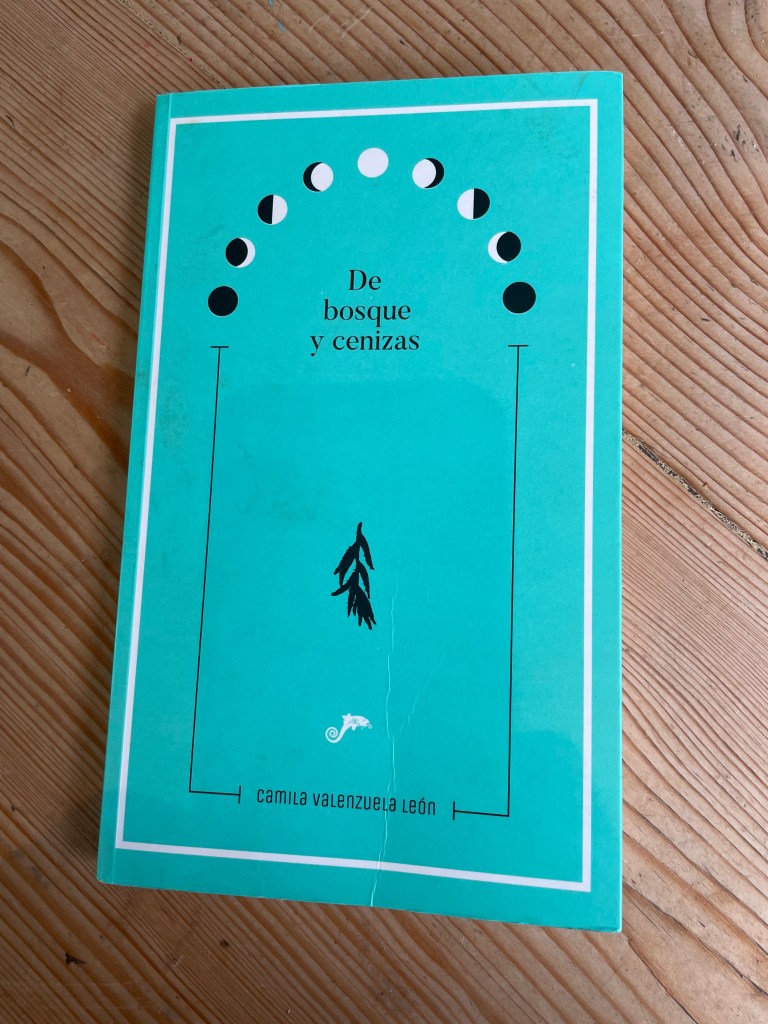
A well-thumbed copy of Camila Valenzuela León's YA novel, De bosque y cenizas

Translating a book for an academic project allows for a bit of luxuriating in the text. If you’re trying to make a living out of literary translation (emphasis on the “trying” there!), then chances are you haven’t got time to sit down and read the book several times before you start. In which case, you might do a quick skim to get a taste for the narrative voice etc, or you might go straight into your first draft and read as you go – I have a feeling that’s what Daniel Hahn said he does, in Catching Fire, but I’ve lent the book to someone so don’t quote me on that because I can’t verify.

Anyway, in this particular instance I’ve got three years, possibly even four, to translate a relatively short book – it comes in at 141 pages total and is written in diary form (and a bit of verse-prose) so many of those aren’t even full pages. I’ve also only got a paperback of the original to work from, and although I have a good relationship with the author and could doubtless ask her to send me a PDF version, I decided to copy the text out into a Word document. I realise that sounds like a monumental waste of time, but actually, if you’ve got that time, I find it offers a really good opportunity for a close reading of the source text, and I noticed several things I hadn’t picked up on my initial reading, such as:

  • The word “desaparecidos” is used to describe the people whose bodies have never been found (the story is set in the aftermath of the Chillán earthquake in Chile, in 1939). Obviously this is a perfectly reasonable word choice that I didn’t even think about first time round, but I’ve also just noticed that they’ve used the town stadium to house all the people whose homes were destroyed in the earthquake, and those two things combined are making me wonder if there’s some veiled reference to the Pinochet dictatorship happening… it could of course just be a coincidence, but worth checking with Camila.
  • Trees! Specifically the willow, or “sauce” – this was a key feature in Las Durmientes, which I translated for my MA project, and actually – now I think about it – there’s a willow that plays a major role in the Zahorí saga (Camila’s earlier novels), too… does the willow hold some particular place in Chilean folklore, or is it something personal to Camila? Another one to check.
  • Black thread (hilo negro) – this is another one that crops up in all her books, and actually I’ve noticed it (or “hilo” at least, I might want to check whether colour is referenced) in the work of other Chilean women writers too… does that warrant further investigation? I have a feeling that in Camila’s work, at least, it has something to do with the embroidery that women in Chile traditionally did and its links to storytelling – both stories told within the embroidery itself and orally, to children by the fire while the mother/grandmother embroiders
  • Barely any characters have a name… this was the case in Las Durmientes, too, but doesn’t apply to Zahorí, so I suspect it is because this is a fairy tale, and characters in traditional stories are often nameless. But was it also a deliberate decision related to the objectification of women, and girls, and particularly indigenous/mestiza women? Another one to check with Camila…

And that’s all just from the first few pages. The funny thing is, when I read it through the first time, I was a bit worried there wasn’t as much to unpack as there had been in Las Durmientes, and this time I’m trying to get a whole doctoral thesis out of it. Now, of course, I’m worried there’s too much and I won’t have room to do it all justice and fit in the reflections on the workshops I plan to do once I’ve got my translation to a half-decent standard. Still, better to have too much to write than too little!

More on this next time…

Back to the PhD…

Someone messaged me on LinkedIn today, asking about my PhD and wanting to know whether I was daunted at the prospect, which reminded me I’ve left that last post hanging a bit. So here goes…

In short, my PhD project is a feminist translation of Camila Valenzuela León’s YA novel, De bosque y cenizas, which I will produce through workshops with secondary school students, where we will revise and adapt my draft translations to produce a finished text that will cause its readers to critically engage with the issues it raises.

As I said before, my motivation to do this came from my master’s, and the work I had begun on establishing feminist translation strategies for children’s literature while translating another YA book by Camila. I have continued to work with Camila since finishing that project, and become more and more interested in what she and others in Chile are doing to change the way that children’s literature is perceived, taking it from something that is seen as having either pure entertainment or educational value, somehow lesser than books written for adults, to something that is recognised as literature in its own right.

There are a lot of brilliant books for children coming out of countries like Chile and Argentina at the moment, written in the aftermath of lengthy and brutal dictatorships. The books might not be about that per se, but there is a common theme of writers telling stories that encourage children towards civic engagement, that promote a “nunca más” (never again) ideal…

And there are a lot of fantastic books for adults from these countries that are being translated into English – many of them published by the brilliant Charco Press – but a lot of UK children’s publishers seem unwilling to take a chance on translating a book that is more than just a good story; there’s a reluctance to believe that children are capable of reading and appreciating literature that holds a subtext.

So my hope for this project is that I can not only establish some effective feminist translation strategies for children’s literature, which can be used by other translators in future, but also that I can help to further the work that Camila and her colleagues are doing, to get Chilean children’s literature recognised and read by children around the world.

Oh, and to answer Hilal’s question: yes, I’m terrified! But I really believe in this project, and I have a fantastic supervisory team behind me at UCC, who are giving me the support and encouragement I need to make this happen.

Catching Fair (a small interjection on reading other people’s diaries)

I know I said my next post would explain a bit more about my actual PhD project, but as the kids have been home over the summer I’ve been finding it harder to focus on the academic reading so have compromised by reading other people’s musings on translation, and I wanted to share some (horribly self indulgent, sorry) thoughts on what I’ve read.

The books I’ve been poring over for the past couple of weeks are Daniel Hahn’s Catching Fire, and Jen Calleja’s Fair: The Life-Art of Translation, two titles that are only really comparable in that they are written by esteemed translators, and have translation as their subject matter. Catching Fire is Daniel Hahn’s translation diary, written while he was translating Chilean author Diamela Eltit’s novel Nunca el fuego jamás (Never did the Fire). The diary was live posted on the Charco Press website at the time and has since been published as a book.

Fair, on the other hand, is… well, I’m not sure how to describe it really. It’s essentially a guided tour through an imaginary book/art/fun fair, in which every stand/attraction represents some facet of the life of a translator. It’s sort of part memoir, part manifesto campaigning for translator visibility and fair pay (ooh, I wonder if there’s a double meaning in the title? Probably – she is a translator, after all, so no word will have gone unconsidered).

Whenever I read books about translation (or attend seminars, workshops, events…) I experience a strange rollercoaster of emotions. In many ways, both these books offer plenty of reassurance – Daniel Hahn’s first drafts look a lot like mine! Jen Calleja worries her German isn’t always up to scratch! – and there’s lots in both of them that any translator could relate to. But then the self doubt begins to creep in. These are both really well established, award-winning literary translators, how could I even think about comparing myself to them? They started young, pushed themselves, found a way to be in the right place at the right time, and had bucket loads of talent to smooth their path… I’m  always impressed at the way imposter syndrome can take hold of me, even when I’m sitting in my own home.

If you want a less egocentric review of these books, here goes: Catching Fire is a great little glimpse into the mind and working life of a translator. We see the text turn from a sketchy first draft to a polished translation, ready to be submitted for editing, and we get some fascinating insights into the challenges and decisions that went into that process. I’ve yet to read the resulting novel – although I bought it at the same time as the diary and spent a good week dithering over which to read first – but I’m confident it will be worth the wait.

Fair is almost a love letter to translation, explaining why she’s stuck with it despite all obstacles – low pay, poor recognition, unpredictable workloads – and I think is possibly more accessible to a non translator, although it’s hard to say really, given my personal situation. Perhaps I’ll lend them both to friends and feed back.

Anyway, with all three kids now back at school I’d probably better get on with some real work. More on my project next week!

Feminism Matters, or How I Ended Up Doing a PhD

When I finished my masters, I told myself and everyone around me that there was absolutely no way I was going to do a PhD. No chance. Not in a month of Sundays. I had absolutely had enough of academia, never wanted to attempt to decipher another convoluted journal article, never mind compile a bibliography. And the idea of presenting at conferences filled me with dread. That was my academic career over. And yet here I am, just embarking on a doctoral project at University College Cork, with three years of textbooks, bibliographies, papers and presentations ahead of me. So how did I get here, and for the love of God why?

When I was working on an assignment as part of the MA, I was looking for potential texts to translate and I came across a Chilean author of books for young adults, Camila Valenzuela León. I got in touch with Camila, who was delighted I’d taken an interest in her work and more than happy for me to translate an extract from one of her books for the assignment. That particular essay was on the application of translation theory, and I had chosen feminist translation: as Camila’s work is heavily influenced by her own feminist stance, this seemed an appropriate choice. However, although there is plenty of scholarship about feminist translation and its strategies, I struggled to find much work that told me how those strategies could be adapted for children’s and YA literature. Strange, I thought, given that children are very much the future, but whatever, so I had a little think about my own strategies, wrote the essay, got a decent mark and left it at that.

By the time I came to start my final extended translation project (ETP), I had got to know Camila and her work a bit better, so was keen to translate another of her texts. She introduced me to a series of fairy tale retellings she had written, and I chose one of those, Las Durmientes (The Sleepers), which is based on Sleeping Beauty, but set in Chile and entrenched in Chilean history and mythology. With a bit more time on my hands (we were given several months to work on the ETP), I decided to delve further into the theory on feminist translation for children, but still found very little. So I thought a bit further about what my own strategies might be, found some scholarship from other disciplines (education, children’s literature) to back them up, and cracked on with the project. Once again, I was awarded a high mark, but I couldn’t help feeling slightly dissatisfied – obviously I was delighted to do well, but I wasn’t fully convinced that I, a 40-year-old woman, and my examiners, both also fully-grown adults, were the best people to judge how effective those strategies were.

Fast forward a year from my graduation – during which time I had been slogging away trying to get a foot in the door of the literary translation world, with varying degrees of success – and I was attending an event at the Birmingham Literature Festival, run by the Feminist Translation Network. The talk was really interesting, with a number of translators talking about how they apply feminist theory in their practice, but what struck me was that still no one was talking about feminist translation for children’s literature. This really played on my mind over the next few days and weeks, and I began to think about why this was so important to me. What I came up with was this:

  • I really believe in the importance of children reading books translated from other languages and cultures, as a way of fostering empathy and inclusivity in the next generation
  • Translated children’s books that also carry a political message, whether that’s feminism or lessons learned from conflict situations have a sort of double value
  • While adults tend to have fully formed political opinions that are unlikely to be changed, children – and particularly adolescents – are more open to new ideas. So YA books containing feminist themes have the potential to influence their readers and change the way they see the world. And, because those readers are the voters and politicians of the future, maybe even change the way the world is run.
  • Camila and other authors are working hard to change the face of young adult literature in Chile, arguing that children are more than capable of deciphering subtext and engaging with political themes, and I feel it is only fair to give the translation of their books the same careful consideration that they have given to the writing of them
  • While it makes sense for adults to come up with and assess the efficacy of feminist translation strategies for literature aimed at adults, surely the best judges of whether strategies aimed at children are effective are the children themselves?

Once I’d established these points, it became painfully obvious that the only person who was going to be able to solve the problem was me (particularly since I seemed to be the only one convinced that it actually was a problem). So, armed with all these ideas and ideals, I set about finding an appropriate supervisory team and devising a plan for my project. More on which next time!

Translators unite!

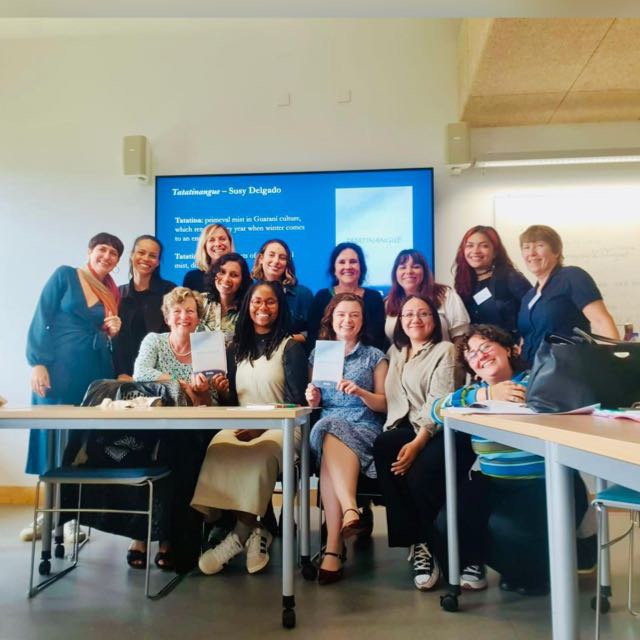
In July, I was lucky enough to attend the BCLT summer school 2025, at the University of East Anglia, Norwich, as part of the Spanish/Guaraní workshop strand. We were a cohort of 12 translators from all over the world – attendees in our group alone had travelled from as far afield as the US, Norway and Germany, as well as some slightly less glamorous locations like Birmingham (that was me!).

Guided by workshop leaders Cecilia Rossi and Juana Adcock, we spent the week translating poems from a recent collection by the revered Paraguayan poet Susy Delgado: Tatinangue. So far so simple, you might think – with 14 of you working on it, surely the whole anthology was done, dusted and sent off to a publisher within the first couple of days? Well. A) clearly you’ve never met a translator before (we spent an entire morning debating the inclusion of the word “of” in one poem), and B) there was a slight hitch: the poems in Tatinangue are written in a mixture of Spanish and the indigenous language of Paraguay (and many other parts of Latin America), Guaraní.

I will admit to coming into the workshop feeling like I might have a slight advantage, having spent my year abroad in Paraguay, although that was 20 years ago now and any Guaraní words I might have picked up at the time have rusted away through lack of use, so I’m not sure who I thought I was kidding. Luckily though, my non-existent Paraguay expertise wasn’t called for, as we had a genuine Paraguayan in the group, Iliana, who works as a translator into both Spanish and Guaraní.

Iliana’s linguistic and cultural knowledge was invaluable, as she was able to give us instant advice on aspects of the Guaraní cosmovision that might have taken us hours to find through online research. Her lived experience of growing up in Paraguay and speaking both Guaraní and Spanish provided us with an insight into the context of these poems that might otherwise have been missing.

Another highlight was the ability to speak with Susy Delgado herself, via the miracle of Teams. While she wasn’t always able to enlighten us on the exact provenance of specific words (“the words choose themselves”, was her assertion), talking to Susy about her life and influences offered us a sense of the meaning behind the poems, allowing us to then turn our minds to rendering this meaning in English. Not to mention the honour of being able to meet and ask questions of such an esteemed writer – Susy is a multi-award winning poet, author and translator with more than 30 published works to her name, and that’s not including her translations.

Collaborative translation is something that has always interested me, and to a certain extent I think translation is always a collaborative process, as it’s rare that I get through a paragraph of translation without asking for someone’s opinion on a specific choice of word or phrase, or appealing to someone else’s expertise on a particular subject. Working together with 13 other translators was a new experience, however, and although in some ways the many and varying opinions slowed down the process (see the aforementioned “of” debate), what that meant was that every word received the careful consideration it deserved. Because while I might consult a friend on a word I’m unsure about when translating alone, there will be 100 others that I’m quite certain of myself on. Cut to a room full of other translators, however, and I soon found that actually a word that had one very clear connotation for me, meant something completely different to someone else.

Ceci and Juana had carefully picked each of the participants because of a special interest or experience in indigenous language or culture, and – together with Ceci’s own work on the ethics of translating work from specific, complex contexts and Juana’s on the translation of indigenous languages – this made for a fascinating, in-depth exploration of the intricacies of translating these poems, looking not just at the words themselves, but their cultural and linguistic context, and the ethical considerations of translating them into English which, like Spanish, is a colonial language.

I found the whole process incredibly inspiring, and have even come home and amended my PhD project proposal as a result (more on this later!), to include more collaboration with the author as well as with target readers. And the good news is that the summer school workshops were just the first part of a larger project on the translation of indigenous literature, so watch this space for more.

Why #WorldKidLit matters

The UK has a thriving children’s book industry, with around 10,000 children’s books published every year. So why should we look overseas for stories to read with our kids, when the pickings are so rich at home?

Reasons to read

Why read to your kids at all? It’s a great form of entertainment, sure, but it also helps them to learn. And it’s not just about learning to read – although there’s nothing better than the first time you watch your child pick up a book and start reading all on their own.

Books help children to learn about the world around them. A good story will draw you in, help you to see what its characters see, feel what they feel. And while it’s obviously vital that kids learn about life in their own culture – reading about societal norms and expectations as well as embracing difference helps a child to grow up into a fully rounded adult – reading about the experiences of children in other parts of the world can give them an empathy and understanding that is difficult to recreate.

Unconscious learning

Some kids love to learn, but others are immediately put off by the sight of a textbook or worksheet. Even if your child is an avid learner, consider the difference between learning about the horrors of World War Two in school, and reading Anne Frank’s Diary or Judith Kerr’s When Hitler Stole Pink Rabbit.

When a child is fully immersed in a story, they become the character they are reading about, just for a short while, and when that happens, everything that happens to that character becomes part of their own story, and so sticks in their minds much easier than facts learned by rote.

Children are the future

Clichéd but true: the kids of today are the leaders of tomorrow (well, some of them are, anyway) and if we don’t want the planet to descend into WW3, it’s important that our children learn to understand and relate to other cultures, to advocate for peace, not war.

We need to learn from the past, too – not just from the wars in Europe, but from more recent atrocities committed under military dictatorships in Latin America, in Asia and the Middle East.

Reading takes you places

WorldKidLit doesn’t have to be serious though – reading is about adventure, exploration. Reading a book set in the Amazon rainforest or in a village high up in the Andes, written by someone who actually lives there, is the next best thing to going there yourself.

So if you’re looking to expand your child’s horizons, why not visit WorldKidLit to find the best new children’s titles from across the globe.