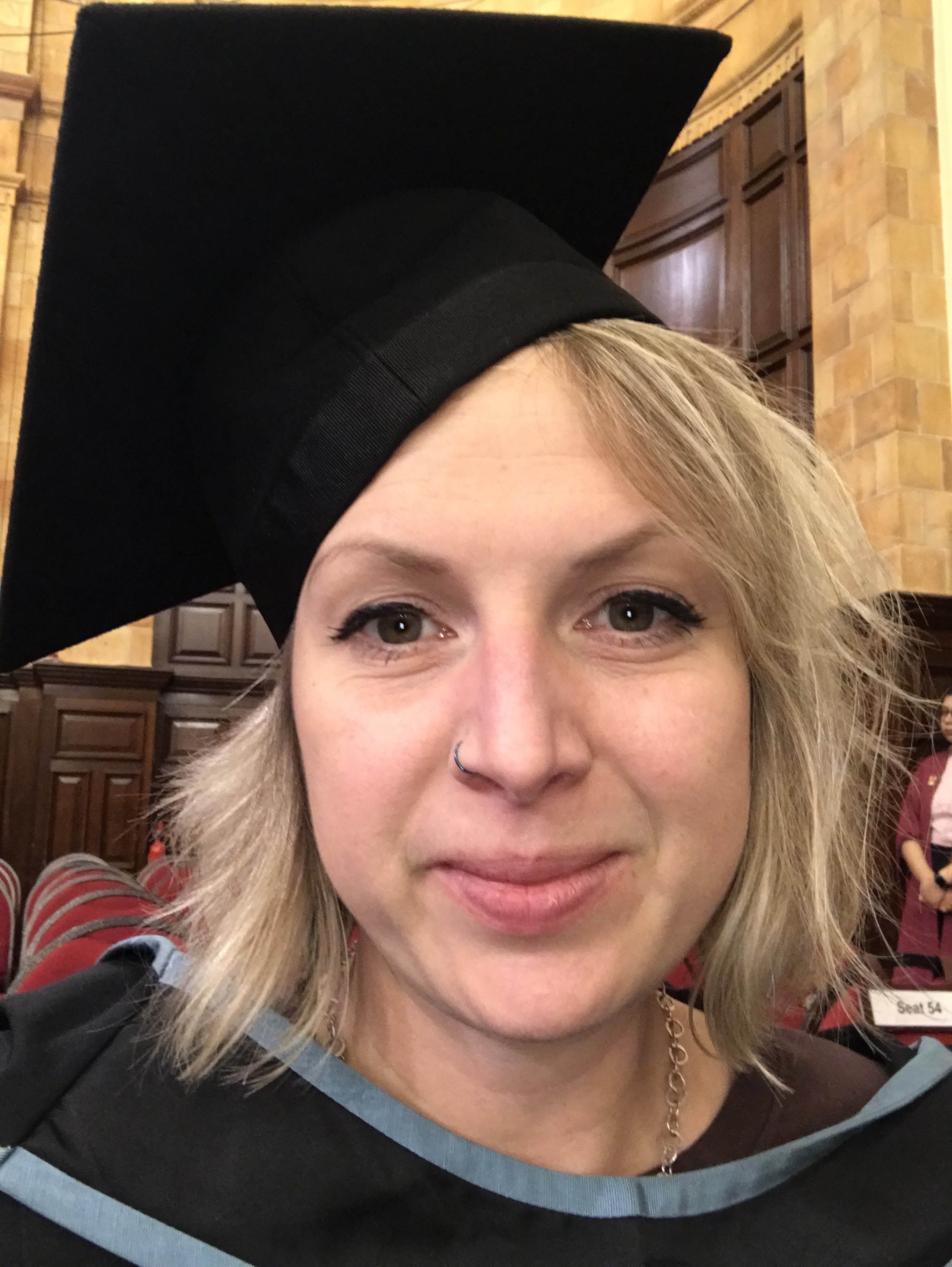
When I finished my masters, I told myself and everyone around me that there was absolutely no way I was going to do a PhD. No chance. Not in a month of Sundays. I had absolutely had enough of academia, never wanted to attempt to decipher another convoluted journal article, never mind compile a bibliography. And the idea of presenting at conferences filled me with dread. That was my academic career over. And yet here I am, just embarking on a doctoral project at University College Cork, with three years of textbooks, bibliographies, papers and presentations ahead of me. So how did I get here, and for the love of God why?
When I was working on an assignment as part of the MA, I was looking for potential texts to translate and I came across a Chilean author of books for young adults, Camila Valenzuela León. I got in touch with Camila, who was delighted I’d taken an interest in her work and more than happy for me to translate an extract from one of her books for the assignment. That particular essay was on the application of translation theory, and I had chosen feminist translation: as Camila’s work is heavily influenced by her own feminist stance, this seemed an appropriate choice. However, although there is plenty of scholarship about feminist translation and its strategies, I struggled to find much work that told me how those strategies could be adapted for children’s and YA literature. Strange, I thought, given that children are very much the future, but whatever, so I had a little think about my own strategies, wrote the essay, got a decent mark and left it at that.
By the time I came to start my final extended translation project (ETP), I had got to know Camila and her work a bit better, so was keen to translate another of her texts. She introduced me to a series of fairy tale retellings she had written, and I chose one of those, Las Durmientes (The Sleepers), which is based on Sleeping Beauty, but set in Chile and entrenched in Chilean history and mythology. With a bit more time on my hands (we were given several months to work on the ETP), I decided to delve further into the theory on feminist translation for children, but still found very little. So I thought a bit further about what my own strategies might be, found some scholarship from other disciplines (education, children’s literature) to back them up, and cracked on with the project. Once again, I was awarded a high mark, but I couldn’t help feeling slightly dissatisfied – obviously I was delighted to do well, but I wasn’t fully convinced that I, a 40-year-old woman, and my examiners, both also fully-grown adults, were the best people to judge how effective those strategies were.
Fast forward a year from my graduation – during which time I had been slogging away trying to get a foot in the door of the literary translation world, with varying degrees of success – and I was attending an event at the Birmingham Literature Festival, run by the Feminist Translation Network. The talk was really interesting, with a number of translators talking about how they apply feminist theory in their practice, but what struck me was that still no one was talking about feminist translation for children’s literature. This really played on my mind over the next few days and weeks, and I began to think about why this was so important to me. What I came up with was this:
- I really believe in the importance of children reading books translated from other languages and cultures, as a way of fostering empathy and inclusivity in the next generation
- Translated children’s books that also carry a political message, whether that’s feminism or lessons learned from conflict situations have a sort of double value
- While adults tend to have fully formed political opinions that are unlikely to be changed, children – and particularly adolescents – are more open to new ideas. So YA books containing feminist themes have the potential to influence their readers and change the way they see the world. And, because those readers are the voters and politicians of the future, maybe even change the way the world is run.
- Camila and other authors are working hard to change the face of young adult literature in Chile, arguing that children are more than capable of deciphering subtext and engaging with political themes, and I feel it is only fair to give the translation of their books the same careful consideration that they have given to the writing of them
- While it makes sense for adults to come up with and assess the efficacy of feminist translation strategies for literature aimed at adults, surely the best judges of whether strategies aimed at children are effective are the children themselves?
Once I’d established these points, it became painfully obvious that the only person who was going to be able to solve the problem was me (particularly since I seemed to be the only one convinced that it actually was a problem). So, armed with all these ideas and ideals, I set about finding an appropriate supervisory team and devising a plan for my project. More on which next time!
 ruth donnelly